 NIFTY-I
Delta surge alert

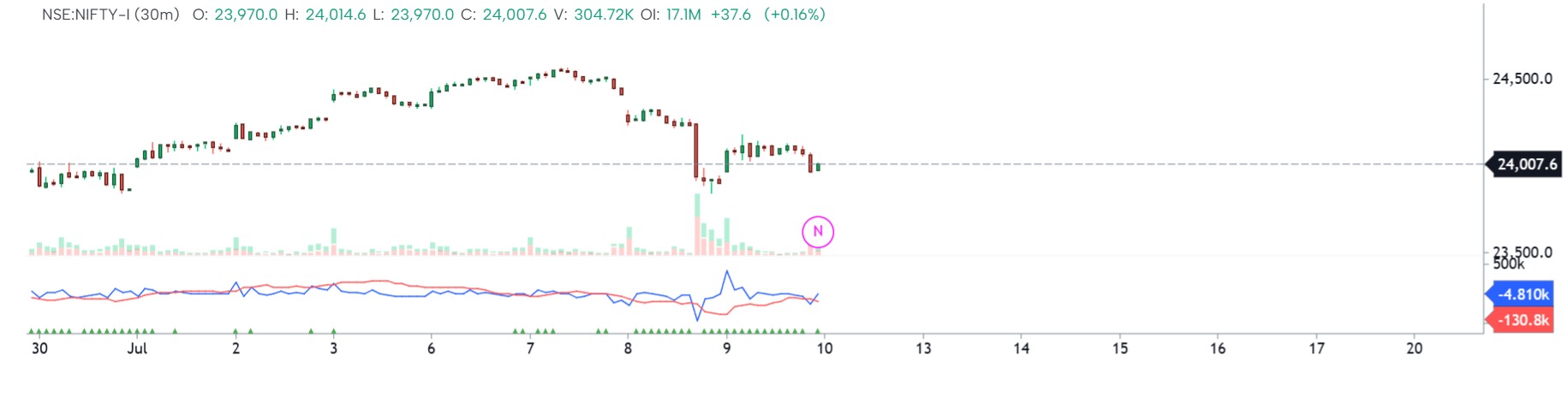
This indicator identifies unusual buying pressure by comparing the current candle's delta with the average delta of the previous 20 candles.
Indicator Logic
Current Delta
Reads the current candle's order flow delta (orderflow.delta).
Delta = Aggressive Buy Volume − Aggressive Sell Volume.
A positive delta indicates buyers are more aggressive than sellers.
20-Candle Average Delta
Calculates the simple moving average of the previous 20 candles (delta[1]), excluding the current candle.
This serves as the normal or baseline buying activity.
Spike Detection
A signal is generated when: Current Delta > 5 × Average Delta (20)
This means the current buying aggression is at least five times greater than the recent average.
Visual Output
A green triangle appears below the candle whenever the condition is met.
The indicator also plots:
Blue line: Current Delta
Red line: 5 × Average Delta threshold
How to Interpret
Green Triangle Appears
Indicates an exceptional surge in aggressive buying.
May suggest institutional participation or strong momentum entering the market.
No Signal
Current buying pressure is within the normal range of the last 20 candles.
Best Used With
For higher-probability trades, combine this signal with:
Imbalance Ratio ≥ 500%
Consecutive Imbalances ≥ 3
Breakout above resistance or VWAP
Higher volume than average
Trend confirmation using EMA or Supertrend
Limitations
A high delta spike alone does not guarantee a price rise.
The signal can occur during short covering or absorption.
In low-volume or sideways markets, false signals may occur.
It works best on liquid F&O stocks and indices where order flow data is reliable.
Overall, this indicator is a momentum confirmation tool, not a standalone buy signal. It is most effective when used together with price action, volume, and order flow confirmation.
The information and publications are not meant to be, and do not constitute, financial, investment, trading, or other types of advice or recommendations supplied or endorsed by GoCharting. Read more in the Terms of Use.
Related Analyses
Comments (0)
Loading comments…